
Whole Foods, Whole You: A Simple Start to Eating Clean after Fifty
Introduction
When I first started figuring out what healthy eating really meant, I had a gut-punch realization:
I’d been what you might call a skinny-fat person someone who looked fine on the outside, but whose body was quietly screaming for help on the inside.
For most of my adult life, I followed the old-school advice:
Eat low-fat everything
Count calories
Avoid meat and oils
Choose “light” snacks and fat-free yogurt
Replace real food with bars, shakes, and cereal
I thought I was doing everything right. But I was running on fumes always hungry, always craving sugar, always trying to “be good” while my energy, skin, mood, and hormones were slowly unraveling.
Then came my 50s. And with them… the wall.
Weight gain. Exhaustion. Bloating. Brain fog. Anxiety. And the deep knowing that this wasn’t just aging this was imbalance.
That’s when I started to look deeper. And what I found shocked me:
Most of the foods I thought were “healthy” were actually ultra-processed junk in disguise.
This blog is meant to be serious, but I threw in a few fun stories so keep reading.
Highly Processed Food what is it? Should you eat it?
Let's get real
Many of the foods we’ve been eating for decades those easy, convenient, packaged options aren’t actually food anymore. They're ultra-processed products, carefully engineered in factories to taste good, last long, and keep you coming back for more.
But here’s the truth no one told us: they’re making us tired, inflamed, and unwell.
Ultra-processed foods are everywhere. They’ve crept into our pantries, our routines, even our sense of comfort. But behind the pretty packaging and health claims, here’s what they often contain:
Artificial flavors, colors, and sweeteners
Preservatives to stretch shelf life
Cheap added sugars, unhealthy fats, and excess sodium
Refined grains stripped of nutrients
Ingredients you’d never cook with at home maltodextrin, soy protein isolate, "natural flavors," and more
And for women over 50? These foods can hit harder.
They mess with hormones. They increase inflammation. They steal energy. They may even worsen weight gain, hot flashes, mood swings, or joint pain.
COMMON EXAMPLES OF HIGHLY PROCESSED FOODS:
- Sugary breakfast cereals
- Soda and diet soda
- Frozen meals and microwave dinners
- Chips, cookies, snack cakes
- Candy and packaged desserts
- White bread and pastries
- Flavored yogurts or instant noodle cups
- Processed meats like hot dogs, deli slices and sausage
- Fast food

"These foods are actually packaged and designed purposely to be convenient, addictive, and shelf-stable, but they are often stripped of real nutrition."
WHY THEY ARE A PROBLEM (ESPECIALLY AFTER 50)
Spikes your blood sugar and causes crashes
Increases inflammation (linked to joint pain, weight gain, skin issues)
Can lead to overeating without feeling full
Lacks fiber, protein, and real nourishment
SIMPLE SWAP MINDSET
Swap: Flavored Yogurt ➡️ Plain Greek Yogurt + Berries & Cinnamon
Swap: Cereal or Granola Bars ➡️ Boiled Eggs or a Handful of Nuts + Fruit
Swap: Frozen Diet Meals ➡️ Meal-Prepped Protein + Veggies
Swap: Soda or Diet Drinks ➡️ Sparkling Water + Lemon or Herbal Tea
Smart Shopping Tips
✅ Check the Ingredients List
If a product has more than 5–7 ingredients or ones you can’t easily pronounce it’s likely highly processed. Keep it simple.
✅ Look for Sneaky Sugar
Sugar hides under many names like dextrose, maltose, cane syrup, and high-fructose corn syrup. If it ends in "-ose," it’s probably sugar in disguise.
✅ Watch Out for Packaging Tricks
Terms like “natural,” “low fat,” or “gluten-free” can be misleading. Always read the label healthy-sounding doesn’t always mean healthy.

The Lemon Loaf That Wouldn’t Die (True Story)
When my youngest daughter was in fifth grade, life was a blur three kids in three different schools, and I was just trying to survive the mornings. So, I did what a lot of busy moms do: I filled her lunchbox with snack packs and ready-made grocery store items. Anything to keep it simple.
Looking back, I cringe a little. (Let’s just say she might’ve been better off with the school cafeteria food.) But it gets worse and funnier.
That summer, she left her lunchbox at school by accident. We didn’t even realize it until the next school year started. When she went back to visit her old fifth-grade teacher, guess what? He had saved the lunchbox for her.
We laughed, of course. She had a new one for sixth grade, no big deal… until she opened the old one.
Inside was a slice of lemon loaf, still in a plastic bag.
Perfectly preserved. Not a speck of mold. No smell. It looked exactly the same as it had months earlier.
I was stunned. How could something meant to be food show zero signs of decay after an entire summer in a sealed box? That was my turning point. We started reading labels. Making small changes. Adding real food back in. Sixth grade lunches looked a lot different.
And hey maybe I wasn’t a “terrible mom.” Just a busy one doing her best. Once I knew better, I did better.
Other Quick Swaps That Changed My Diet (and My Life)
Swap: Coffee Creamer ➡ Heavy Whipping Cream + Monk Fruit-Sweetened Syrups
Fast Food Fries Air-Fried ➡ Sweet Potato Wedges
Cereal or Granola Bars ➡ Boiled Eggs + Berries or Nuts
White Bread ➡ Sprouted Grain or Sourdough
Ice Cream ➡ Frozen Banana + Nut Butter + Cocoa in the Blender
Frozen Pizza ➡ Cauliflower Crust Pizza with Veggies & Goat Cheese
The Circle K Moment That Hit Me Hard
The other day, I stopped at a busy Circle K to use the restroom. It was packed like something was being given away for free. As I stood there, I paused and really looked around.
People were rushing to pour giant sodas, grabbing armfuls of packaged snacks, microwaving burritos, and watching hot dogs slowly roll under fluorescent lights on those metal rollers. The shelves were glowing with brightly colored boxes, flashy labels, and cartoon characters.
And all I could think was:
This isn’t food.
This is addiction packaged as convenience.
I don’t say that to judge because for a long time, I lived that way too. I craved the quick fix. I trusted the label. I didn’t know what I didn’t know.
But standing there, I felt a deep sadness. Not just for the rows of ultra-processed products pretending to nourish but for how normal this has become. How disconnected we’ve become from real food, real nourishment, and even our own bodies.
We’ve been marketed to, manipulated, and misinformed. And it shows in our health, our energy, our moods, our confidence.
MINI CHALLENGE FOR YOU
For 3 days, try to eat one meal
SHOPPING TIPS
Stick to the outer edges of the grocery store. That's where you'll usually find the fresh produce, meats, dairy and whole foods. The center aisles tend to be full of packaged and processed items.
a day with zero barcodes.
This is your whole food moment - one plate at a time
The Emotional Side of Processed Food
When we think of processed foods, we usually think about labels and ingredients. But for many of us, the connection runs deeper into our habits, memories, and even emotions.
For women over 50, processed foods often come with comfort, convenience, and nostalgia. That bag of chips or box of cookies might remind you of easier times, childhood routines, or even moments of reward during stressful days.
But here's the truth: those same comfort foods can become a cycle of emotional eating that keeps you stuck.
You may reach for them when you're:
Tired
Lonely
Overwhelmed
Celebrating
Stressed or anxious
And you’re not alone me too. Processed foods are intentionally designed to light up the pleasure centers in your brain, triggering feel-good chemicals like dopamine. It’s not just willpower it’s biology.
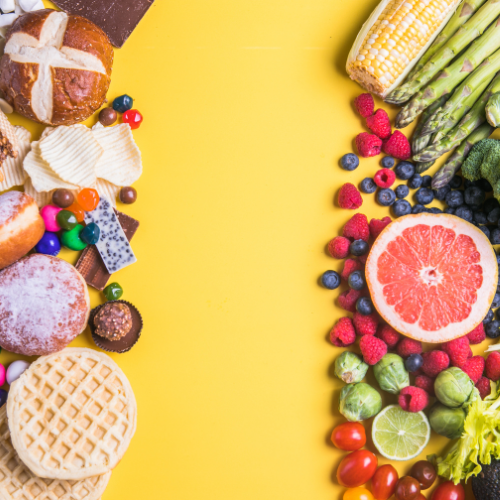
“Okay, real talk does that food on the right call your name a little too loudly?”

“Sometimes I wasn’t even hungry I was just sad or stressed. That sleeve of cookies didn’t fix it, but it gave me 10 minutes of escape.” Glow Beyond Fifty Reader
Conclusion: Coming Back to What Feels Right
The truth is, most of us have relied on processed foods at some point out of habit, convenience, or even comfort. But as we step into this vibrant chapter of life after 50, it’s time to get intentional about what truly nourishes us.
You don’t need to be perfect. You just need to start noticing. One swap at a time. One label at a time. One decision at a time.
Because the more we choose real, whole foods that work with our bodies not against them the better we feel. More energy. Fewer cravings. A stronger sense of control.
You’re not giving something up you’re getting something back.
Vitality. Clarity. And a glow that can’t be packaged.
Whole foods fuel your body with real nutrients your system recognizes and can use.
Reading labels matters fewer ingredients usually means better choices.
Small, consistent swaps are more powerful than extreme diets or cutting everything out.